Cantonese vs Mandarin: 7 Compelling Reasons to Choose Cantonese in 2025
Cantonese vs Mandarin: 7 Compelling Reasons to Choose Cantonese in 2025
Standing at the crossroads of Chinese language learning? You're not alone. Over 50 million people worldwide are currently learning Chinese, and most face the same dilemma: Cantonese or Mandarin?
After helping hundreds of students navigate this decision, I've discovered something surprising: while Mandarin gets all the attention, Cantonese might be the smarter choice for 2025.
Here's why.
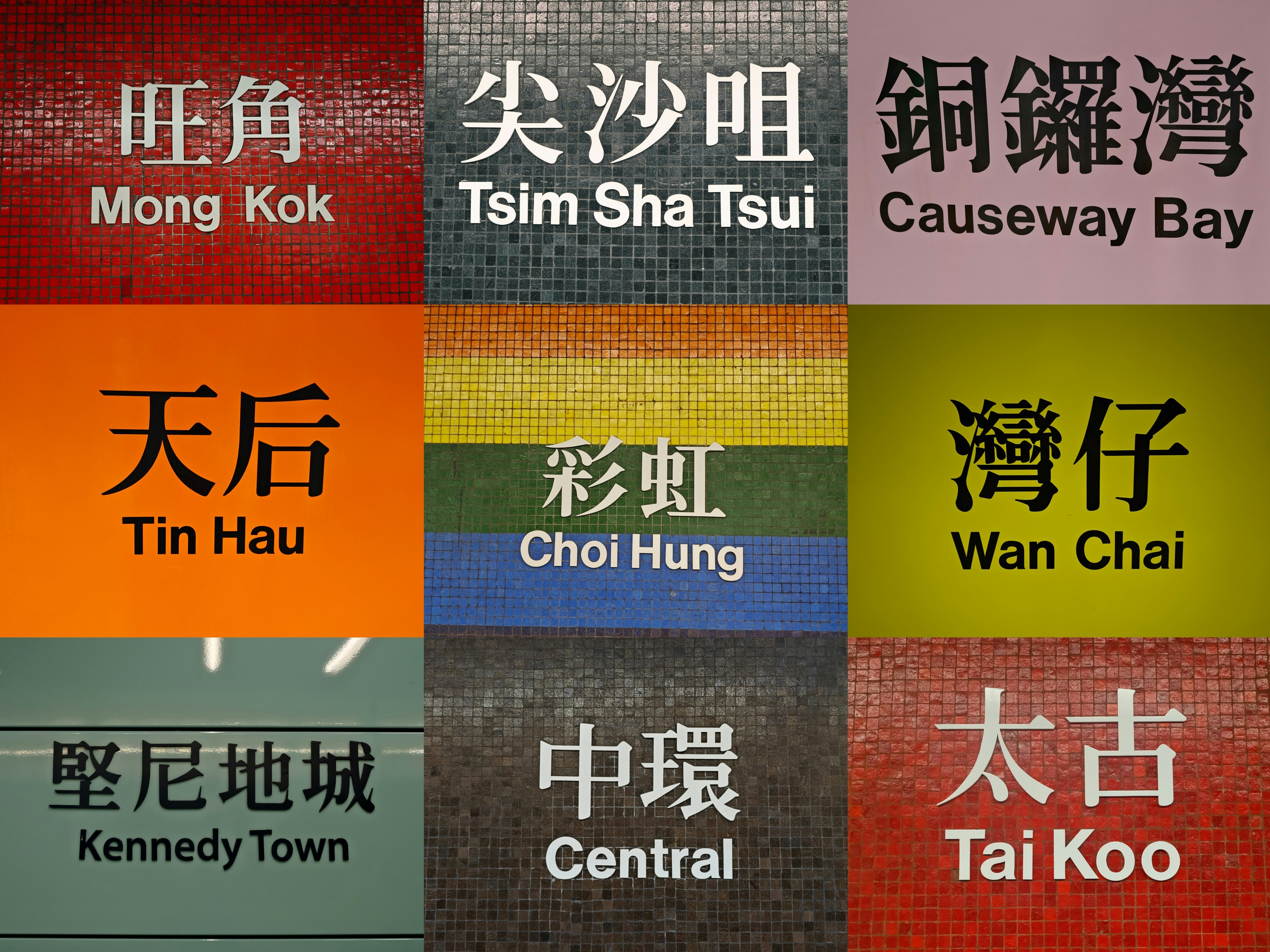
The Great Chinese Language Divide: Understanding Your Options
Before diving into why Cantonese deserves serious consideration, let's clarify what we're comparing:
Mandarin (普通話) - The official language of mainland China, Taiwan, and Singapore
- Speakers: 1.1+ billion worldwide
- Tones: 4 main tones
- Script: Simplified Chinese (mainland) or Traditional Chinese (Taiwan)
- Romanization: Pinyin
Cantonese (廣東話) - The heart language of Hong Kong, Macau, and Guangdong
- Speakers: 80+ million worldwide
- Tones: 6-9 tones (depending on classification)
- Script: Traditional Chinese characters
- Romanization: Jyutping or Yale
Why Everyone Says "Learn Mandarin First" (And Why They Might Be Wrong)
The conventional wisdom is clear: "Mandarin has more speakers, so learn that first."
This advice made perfect sense 20 years ago. But in 2025, the landscape has shifted dramatically.
Here's what the "Mandarin-first" crowd gets wrong:
❌ Myth: More speakers always equals better opportunities
✅ Reality: Strategic positioning in smaller, high-value markets often yields better results
❌ Myth: Mandarin is "easier" to learn
✅ Reality: Both languages present unique challenges - difficulty depends on your goals and learning style
❌ Myth: You can "add Cantonese later"
✅ Reality: Learning tonal systems simultaneously is actually harder than mastering one deeply first
7 Compelling Reasons to Choose Cantonese in 2025
1. The Hong Kong Advantage: Asia's Financial Gateway
Hong Kong isn't just another Chinese city - it's the financial bridge between East and West.
The numbers speak loudly:
- Hong Kong handles over $6.6 trillion in daily foreign exchange trading
- Home to over 1,700 multinational companies using it as their Asian headquarters
- Cantonese fluency commands premium salaries in finance, consulting, and international trade
When I worked with a Goldman Sachs analyst last year, she shared: "Knowing 廣東話 opened doors Mandarin never could. Clients trusted me differently when I could speak their heart language."
Career Impact: Cantonese speakers in Hong Kong earn 15-30% salary premiums compared to English-only professionals in similar roles.
2. Cultural Richness: Gateway to Authentic Chinese Heritage
Cantonese preserves elements of Chinese culture that Mandarin has lost.
Consider these treasures:
- Classical Chinese literature: Many ancient poems rhyme properly only in Cantonese
- Traditional festivals: 中秋節 (Mid-Autumn Festival) traditions remain most authentic in Cantonese-speaking regions
- Cuisine culture: Authentic 點心 (dim sum) experiences require understanding the nuanced vocabulary
Last month, I watched a student finally "get" a Tang dynasty poem after learning it in Cantonese. The rhythm and rhyme that seemed forced in Mandarin suddenly flowed naturally. That's the power of linguistic authenticity.
3. The Competition Gap: Stand Out in a Crowded Market
Here's an uncomfortable truth about Mandarin learning:
Everyone is doing it.
- 50+ million people currently study Mandarin worldwide
- Thousands of new Mandarin speakers enter the job market annually
- Competition for Mandarin-required positions is fierce
Meanwhile, Cantonese offers a blue ocean:
- Fewer than 2 million non-native speakers worldwide
- High demand, low supply in international businesses
- Premium positioning as a specialized skill
Real example: A startup founder told me his company specifically sought Cantonese speakers for their Hong Kong expansion. "We had 200 Mandarin speakers apply, but only 3 with solid Cantonese. Guess who got the interviews?"

4. Media and Entertainment: Your Cultural Passport
Cantonese unlocks an entertainment universe closed to most learners:
Cinema Legacy:
- Hong Kong films from Bruce Lee to John Woo shaped global cinema
- Stephen Chow comedies reveal uniquely Cantonese humor (無厘頭 style)
- TVB dramas offer authentic contemporary dialogue practice
Music Renaissance:
- Cantopop is experiencing a global revival
- Artists like Eason Chan and Joey Yung have international followings
- Understanding lyrics deepens appreciation immeasurably
Streaming Reality: Netflix, Amazon Prime, and other platforms are investing heavily in Cantonese content. Early adopters get the best cultural experience.
5. The Diaspora Connection: Global Communities Await
Cantonese connects you to established overseas Chinese communities worldwide:
Major Cantonese-speaking communities:
- North America: San Francisco, New York, Toronto, Vancouver
- Europe: London, Paris, Amsterdam
- Southeast Asia: Singapore, Kuala Lumpur, Jakarta
- Australia: Sydney, Melbourne
Community Benefits:
- Business networks built over generations
- Cultural organizations preserving traditions
- Restaurant and service industries where Cantonese opens doors
6. Linguistic Sophistication: The Tone Challenge Advantage
Yes, Cantonese has more tones than Mandarin. But here's the twist:
Learning more tones first makes you a BETTER language learner.
The science: Studies show that mastering complex tonal systems enhances:
- Musical pitch recognition
- Overall language processing ability
- Cognitive flexibility
Practical benefit: Students who master Cantonese tones find Mandarin tones "surprisingly easy" afterward.
One student described it perfectly: "Going from 廣東話 to 普通話 felt like switching from guitar to ukulele - fewer strings, same musical foundation."
7. Future-Proofing: The Greater Bay Area Boom
China is betting big on the Greater Bay Area - the economic zone connecting Hong Kong, Macau, and Guangdong province.
The vision: An integrated region of 70+ million people rivaling Tokyo or New York.
The language reality: While Mandarin is official, Cantonese remains the business language for:
- Local relationships and networking
- Cultural understanding and trust-building
- Historical business practices and traditions
Investment flows: Over $1.4 trillion in infrastructure projects are connecting these regions. Early movers with Cantonese skills position themselves for unprecedented opportunities.

When Mandarin Still Makes More Sense
Full transparency: Cantonese isn't always the right choice.
Choose Mandarin if:
- Your career focuses on mainland China specifically
- You need to read/write extensively for academic work
- You're interested in government or diplomatic roles
- Your personal heritage connects to Taiwan or mainland China
Choose Cantonese if:
- Hong Kong, Macau, or Guangdong feature in your plans
- You love films, music, and cultural depth
- You want career differentiation and premium positioning
- You're drawn to challenge and linguistic sophistication
Your Cantonese Learning Roadmap for 2025
Month 1-2: Foundation
- Master basic greetings: 你好 (hello), 早晨 (good morning), 再見 (goodbye)
- Learn tone system with Jyutping
- Start with 50 most common characters
Month 3-4: Practical Communication
- Food ordering: 我要 (I want), 幾多錢 (how much)
- Transportation: 去邊度 (where to go)
- Basic conversation patterns
Month 5-6: Cultural Immersion
- Watch TVB dramas with subtitles
- Listen to Cantopop music
- Practice with language exchange partners
Month 7-12: Advanced Skills
- Business vocabulary for your industry
- Reading traditional characters fluently
- Engaging in complex conversations
The Bottom Line: Why 2025 is Cantonese Time
Here's what I wish someone had told me when I started learning Chinese:
The best language choice isn't always the most obvious one.
Mandarin will always have its place as the "practical" choice. But in a world where everyone zigs toward Mandarin, zagging toward Cantonese creates unique opportunities.
The convergence of factors in 2025:
- Hong Kong is solidifying as Asia's financial center
- Cultural content is globalizing - Cantonese entertainment is booming
- Competition for Mandarin roles is intensifying
- Specialized skills command premiums in the modern economy
Most importantly: Language learning should inspire you. If Hong Kong films spark your curiosity, if Cantopop moves your soul, if the challenge of mastering complex tones excites you - follow that energy.
Passion-driven learning always outperforms strategy-driven learning.
Ready to Begin Your Cantonese Journey?
The question isn't whether you should learn Chinese - you should.
The question is which variety of Chinese will unlock the doors you want to walk through.
For an increasing number of learners in 2025, that answer is 廣東話.
What resonates most with your goals? Business opportunities in Hong Kong? Cultural depth and authenticity? Career differentiation? The intellectual challenge?
Tell us in the comments - which reason convinced you to consider Cantonese? Or are you still team Mandarin?
Either way, the most important step is the first one. 加油! (Keep going!)
Ready to start learning? Check out our Complete Cantonese Pronunciation Guide and Essential Phrases for Beginners.